
If you’ve noticed a crack along your basement wall, a persistent musty smell, or a floor that suddenly feels a little uneven, it’s natural to wonder what’s really going on. At All Pro Restoration, one of the questions we hear most from Eastern Massachusetts homeowners is whether foundation water damage is something to genuinely worry about. Honestly, it can be, especially in a region like ours.
Foundation water damage rarely happens overnight. Instead, it builds gradually, often out of sight, until small warning signs turn into costly structural problems. In this guide, we’ll walk through how foundation water damage happens, the signs to watch for, why Eastern Massachusetts homes face some unique regional risks, and what to do if you suspect your foundation has already been affected.
Key Takeaways
- Foundation water damage builds gradually through hydrostatic pressure, soil saturation, and prolonged moisture exposure.
- Warning signs include horizontal cracks, bowing walls, musty odors, uneven floors, and sticking doors or windows.
- Eastern Massachusetts’s high water table and coastal proximity make homes here especially vulnerable to foundation water damage.
- Horizontal cracks and active moisture point to water-related damage; small vertical cracks are usually normal settling.
- Early professional assessment is the most reliable way to prevent minor foundation water damage from becoming a major structural repair.
What Is Foundation Water Damage?
Foundation water damage refers to the structural weakening that happens when water infiltrates, surrounds, or pressures the concrete or masonry supporting your home. It can range from minor cosmetic issues, like surface staining, to serious structural concerns, like cracking, bowing, or shifting.
The key difference comes down to depth. Cosmetic water exposure affects only the surface, while structural foundation water damage compromises the material itself. Knowing which one you’re dealing with is the first step toward protecting your home.
How Water Damage Leads to Foundation Problems
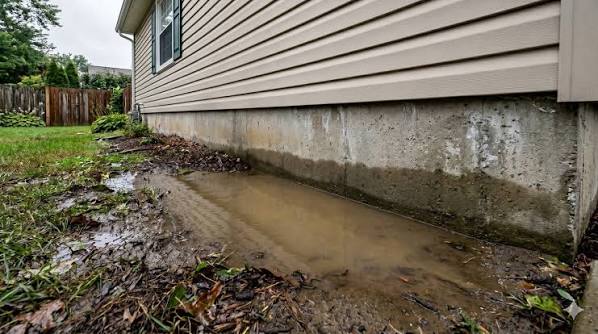
So, how does this actually happen? Foundation water damage rarely comes from one dramatic event. More often, it’s the result of ongoing conditions around your home.
- Hydrostatic pressure: When soil around your foundation becomes saturated, water builds up and pushes against your foundation walls, eventually causing cracks or bowing.
- Soil saturation: Saturated ground loses its ability to support your foundation evenly, which can lead to shifting or settling.
- Prolonged moisture exposure: Consistent dampness slowly weakens concrete and masonry over months or years, even without a single major flood.
In Eastern Massachusetts, this last point matters more than you might think. Because groundwater levels here tend to run higher year-round, moisture exposure isn’t just a storm-driven risk. It’s an ongoing one.
Signs of Foundation Water Damage to Watch For
Catching foundation water damage early can save you thousands of dollars in repairs. Here’s what to watch for:
- Horizontal cracks in foundation walls
- Bowing or inward-leaning basement walls
- A persistent musty smell or dampness in the basement
- Water stains or white, chalky mineral deposits (efflorescence) on walls
- Uneven or sloping floors
- Doors and windows that stick or no longer close properly
If you’re noticing more than one of these at the same time, foundation water damage — not simple wear and tear — is likely the underlying cause.
Not Sure If It's Foundation Water Damage?
Why Eastern Massachusetts Homes Are Especially at Risk
Foundation water damage isn’t unique to any one region, but several local conditions make Eastern Massachusetts homes more vulnerable than average.
- High water table: Many Eastern Massachusetts communities sit close to sea level, which means groundwater naturally sits closer to the surface and puts constant pressure on foundations.
- Sandy, coastal soil: This soil drains differently than inland clay, but it can still shift and erode around foundations during heavy or prolonged rain.
- Nor’easters: These powerful coastal storms bring intense rainfall that saturates the ground quickly.
- Storm surge: In low-lying coastal areas, storm surge can push water directly against foundations from the outside.
Interestingly, homeowners further inland face a different version of this same problem. Our guide on foundation water damage in Central Massachusetts covers how clay soil and freeze-thaw cycles create similar risks there, just from a different set of causes.
Foundation Water Damage vs. Normal Settling — How to Tell the Difference
Not every crack is cause for alarm. Here’s how to tell foundation water damage apart from normal home settling:
- Normal settling: small, vertical cracks of consistent width, with no active moisture or odor.
- Foundation water damage: horizontal cracks, bowing walls, active dampness, or cracks that visibly widen over time.
If you’re uncertain which category your foundation falls into, it’s always safer to have a professional evaluate it rather than assume the less serious explanation.
What to Do If You Suspect Foundation Water Damage
If you notice any of the warning signs above, here’s what we recommend:
- Don’t ignore small cracks or damp spots — they rarely resolve on their own.
- Document what you see with photos and notes, including dates, for insurance purposes.
- Avoid DIY sealing on active structural cracks, which can mask a problem without fixing it.
- Monitor changes closely, but call a professional promptly if cracks widen or new symptoms appear.
Foundation Water Damage Repair: When to Call the Professionals
A professional foundation water damage repair assessment typically includes identifying the moisture source, evaluating the extent of structural impact, and addressing both the water intrusion and any resulting damage, not just the visible symptoms.
Early intervention matters. The longer foundation water damage goes untreated, the more it tends to spread, and the more expensive repairs typically become. Our water damage restoration team handles water extraction, moisture control, and structural drying, so your foundation, and the rest of your home, stays protected. If you’re unsure of the extent of the damage, starting with a professional water damage inspection gives you a clear, documented picture before any repair work begins.
Protect Your Foundation Before It's Too Late
Frequently Asked Questions
Can water damage affect your home's foundation?
Yes. Water that pools or seeps around your foundation can create hydrostatic pressure, saturate supporting soil, and weaken concrete over time, all of which can lead to cracking, bowing, or shifting.
How do you know if water damage has affected your foundation?
Common signs include horizontal cracks, bowing basement walls, musty odors, uneven floors, and doors or windows that no longer close properly. Noticing several at once is a strong signal to have your foundation evaluated.
Is foundation water damage covered by insurance in Massachusetts?
Coverage varies by policy and cause of damage, so it's best to review your specific policy or speak with your insurance provider. Sudden, accidental damage is generally more likely to be covered than damage caused by long-term neglect.
How much water exposure does it take to damage a foundation?
It doesn't require a major flood. Chronic, low-level moisture exposure over months or years can be just as damaging as a single large water event, since it steadily weakens concrete and increases hydrostatic pressure.
How do I tell the difference between foundation water damage and normal settling?
Normal settling usually shows up as small, vertical cracks of consistent width with no moisture involved. Foundation water damage tends to involve horizontal cracks, bowing walls, or active dampness, and often gets worse over time.
A Small Crack Today Can Mean a Major Repair Tomorrow
Foundation water damage builds quietly, especially in a region like Eastern Massachusetts, where a naturally high water table keeps the pressure on your home year-round. If you’ve spotted cracks, dampness, or shifting, don’t wait to find out how serious it is. Contact All Pro Restoration today for a foundation assessment and take the first step toward protecting your home before a small issue becomes a costly one.